_edited.jpg)

Manwei Chan’s Journey: From Antarctica to the Atacama Desert (and everywhere between)
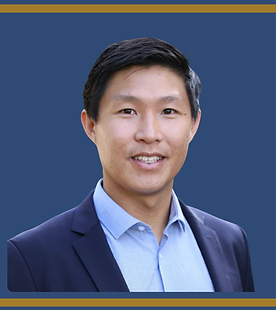
Manwei Chan has had a fascinating and enviable career spanning cosmology research in extreme environments, to traveling widely across the globe to develop international business on behalf of Voyager Technologies. He was named a Future Space leader and NSF and Matthew Isakowitz fellowship recipient during his PhD at MIT and today leverages his experience to advocate for innovations in space manufacturing and the Starlab space station.
We sat down with him to discuss his extreme environment research and views on the future of space.
What motivated you to go into the space industry?
I’ve always had an interest in space since I can remember. From watching Star Wars and reading Ender’s Game to looking through an actual telescope, space has always captivated me. I began my studies as an astronomer and cosmologist, learning how extreme environments are enablers of science, and I have since worked in the space industry to allow researchers and manufacturers to utilize the extreme environment of space.
What are some highlights of your experiences in the space industry, career-wise or otherwise?
I’ve had the chance to live in some of the most extreme environments on Earth, including a year at the South Pole and a year in the Atacama Desert in Chile to study the origins of the Universe. Living in these places, I learned first-hand how difficult it can be for humans to exist at these outposts, from the frozen climates to the logistical challenges involved with keeping humans alive, but I also learned that these are the only places we can conduct science at the caliber required to push the field forward.
Tell us more about that South Pole research! What was it like and how did it contribute to your space journey?
At the South Pole, I was working on the BICEP telescope, which was observing the cosmic microwave background for signs of inflation, a theorized epoch that would explain many inconsistencies in our current understanding of the Big Bang. At the South Pole, there was minimal water and atmosphere between the telescope and space, which is why the telescope was located there. I ensured the telescope was working during the Antarctic winter, which lasted from February to November and no one was allowed to enter or leave the station. I’d walk out to the telescope in temperatures as low as -100F (-73C) to make sure it was operating correctly. In fact, during the winter season, it is more difficult and time consuming to bring someone out of the South Pole station back to civilization than to bring someone back from the International Space Station.
One of the other unique aspects of living at the South Pole was the community. During the winter, you get to know the other 42 station crew members very well. In a way, it was a crash course in understanding humans, how we think, how we operate, and how being in an isolated, extreme, environment affects us. These interpersonal dynamics are something that I imagine humans going through when we set up bases on other celestial objects, such as NASA’s planned moon base.
Your career trajectory changed from technical to business development. What influenced the pivot? What advice would you give to someone who was interested in doing the same?
There were three main factors that influenced the trajectory shift. The first: Covid occurred during my PhD, and given that my work was purely software, I found myself waking up every morning, going to work in my room staring at a laptop for 12+ hours, before going back to bed in my same room. Many people shared a similar, virtual, isolating experience during the pandemic, and having lived the extremely isolated computer-tied existence, it made me realize that I wanted a life that took me away from screens.
The second: The rise of AI, in particular for software development, has diminished the value of some of the coding skills I learned during my PhD. Today, I still believe a skilled software developer is needed at the helm of any AI produced coding project, but AI will only be used more and more in the future for software development–it’s only getting better. The move out of software work was partly incentivized to stay ahead of AI!
The third: One of my MIT professors told me that the most valuable skill you learn out of your PhD isn’t technical, but it’s the ability to become an expert in a topic. That’s a skill you can take anywhere in your career. When I received an opportunity to work with someone I truly respect and admire, doing a job building something I can be proud of, it wasn’t a difficult decision.
The most important advice I’d give is to know yourself. Strive to understand who you want to be, what you want to do, and what makes you happy. Once you have an idea, you can begin formulating a plan to make that happen, whether it’s learning new skills, pursuing specific education, or putting yourself in positions to grab an opportunity if it arises. Oftentimes knowing yourself is easier said than done. I remember during my time at MIT, my advisor told me to spend some time figuring out what I wanted to do. I spent a week in a park with a journal. Being intentional like that can kick start your journey to understanding what makes you happy.
Tell us about working for Voyager; what are some of the accomplishments you’ve been proud of being a part of?
I’ve had the opportunity to co-found the Voyager Institute for Space, Technology and Advancement. It’s an institute that is the first of its kind in the US, and potentially even the world. It’s a magnet for anyone that is doing work that can utilize the space environment for research and manufacturing, and it is the foundation of what I believe will be the next era of commercial space–one where we are utilizing the unique environment of space to its fullest potential. Through this project, I’ve had the opportunity to travel all around the world to get other countries, communities, and space agencies excited about the possibilities of this new era.
What is one thing you wish more people knew about in the space industry?
This may be changing soon with events such as the SpaceX IPO and the rise of on-orbit data centers, but historically the space industry has attracted people, not because of money or fame, but because of passion. People are in the space industry because they’ve been enthralled by the cosmos and they want to build cool things to explore it. This has led to a close-knit community of space-nerds that brings together some of the most interesting people I’ve ever met!
Who’s your mentor/someone you look up to, and why?
I referred to him earlier, but my boss and mentor Jeffrey Manber. He was one of the original pioneers of the commercial space industry, originally commercializing the Russian Mir Space Station! Sometimes his ideas might seem crazy, but he has the ability to realize them and put them into existence, which is a superpower in my book! Having worked with him for a while, I’ve come to see the power of integrity–doing what you are saying you will do, and acting with a moral conscience. And perhaps most importantly, he cares. He cares about the younger generation and that we do well.
What gets you the most excited for the future of space?
I believe we are nearing the precipice where before, we saw the advantage of space as the ultimate high-ground, to where now, we see and utilize space for all of its unique properties, including the vacuum, radiation, access to solar power, and microgravity environment. Currently, the most successful commercial space sectors are telecommunications and remote sensing, stemming from the advantage given by the altitude of the satellites. In space, satellites can connect areas on Earth that are beyond the line-of-sight of the message sender, but also to obtain imagery that provides insight given its unique in-space vantage point.
We are about to enter an era where the unique space environment can be used for more than its altitude, whether it’s in-orbit data centers or in-space manufacturing, we are going to start seeing new ways to utilize the extreme environment of space to improve life for humans on Earth.
Any last thoughts you’d want to leave with our audience?
We live in a time where geopolitics often impedes collaborative efforts between the citizens of the world. However, in the space industry, we should view the commercial space industry as a tool to enable joint efforts and partnerships. For an example of this, see the payload sent to the International Space Station (ISS) by the Beijing Institute of Technology in 2017. At the time, the Chinese Tiangong space station had not been launched yet, and the ISS was the only space station available for microgravity research. Yet the Wolfe Amendment stood as an obstacle for collaboration–stating that NASA could not work with China. However, because Nanoracks, a US company, is a commercial entity, it was able to devise a way to adhere to the Wolfe Amendment while also getting the Chinese payload to space, enabling the unique discoveries that can only happen on the ISS through US/Chinese collaboration. That is the power of commercial space!