
About Us
The Full Story
The story most people tell about Asian Americans in aerospace is that we are underrepresented. That story is partly right, partly wrong, and the difference matters. Asian workers make up 12.1% of the U.S. aerospace engineering workforce, roughly twice the Asian share of the U.S. labor force overall[1]. In aerospace engineering, we are at the table.
We are not, however, at the head of it.
Asian Americans hold 13% of professional roles across large U.S. employers but only 6% of senior management seats. At the very top, the gap is starker: Asian Americans are 1.4% of Fortune 500 CEOs, 1.9% of corporate officers, and the Asian share of S&P 500 CEOs has stalled near 2% for a decade[2]. When Asian Americans do reach the CEO seat, an archival study of 4,951 CEOs across five decades found we are appointed roughly two and a half times more often during organizational decline than during growth, and our tenure averages 3.25 years compared with six years for white CEOs[3]. This pattern, sometimes called the glass cliff, is the bamboo ceiling expressed at scale.
The aviation side of the industry tells an even sharper story. Only 2.2% of U.S. airline pilots are of Asian descent, compared with about 9% Asian representation in the U.S. workforce overall[4]. The cockpit, the air traffic control tower, and the operations leadership of major carriers remain among the most demographically narrow workplaces in American industry.
Aggregated “Asian” data hides as much as it reveals. The Asian American and Pacific Islander category covers more than 48 distinct ethnicities and over 300 languages[5]. Filipino students are nearly 60% less likely to major in STEM than other Asian American students, and Southeast Asian and Pacific Islander communities remain persistently underrepresented across science and engineering[6]. Asian American women hold just 4.8% of all engineering jobs[7], and fewer than 1% of promotions from senior vice president to the C-suite at large organizations go to Asian American women[8]. When TAAAO talks about representation, we are talking about these specific gaps, not a single aggregate number.
Aerospace and aviation are industries in motion. More countries than ever are gaining access to space. The faces of who belongs in these fields are changing, and the leadership tier has to change with them. TAAAO exists to accelerate Asian American advancement into aerospace and aviation leadership, with intentional focus on the underrepresented subgroups within our community and on aviation operations, where the gap is widest. We do this through mentorship, professional development, scholarships and fellowships, and a curated network of opportunities for Asian American talent across the industry.
Executive Team

Co-Founder, President
Ayumi Tsuyuki
Ayumi Tsuyuki has worked across the aerospace industry in roles spanning Integration & Test, Mechanical, and Systems engineering on programs including the Lunar Gateway and orbital refueling projects. She is currently a Master's student at Columbia University for Mechanical Engineering, where she is researching the astrodynamics of future medical space module (startup spacER). She earned her Bachelor's degree in Biomedical Engineering from Duke University, where she developed simultaneously a passion for shaping the future of human space exploration and for increasing accessibility and community in the space industry.

Co-Founder, Vice President
Julia Pimentel
Julia Pimentel is a Sr. Materials Test Engineer in the aerospace industry focused on qualification and acceptance testing of Avcoat heatshield material for the Orion program. She is concurrently a mechanical engineering PhD student at CO School of Mines investigating the process-structure-performance-property relationships of additively manufactured composites, having earned her M.S. in mechanical engineering at CO School of Mines and B.S in materials science and engineering at Virginia Tech.

Head of Mentorship
Michael Angeles
Michael has an extensive background of 7+ years in the space industry spanning operations, test, systems, and software engineering including AI/ML and most recently engineering management across commercial civil and national security space. He is passionate about advancing the next generation of human spaceflight and mentoring the new Artemis generation in breaking into the space industry.

Head of Events
Venkat Daita
Venkat Daita is a Vehicle Engineering Intern at Astrolab working on developing the FLIP & FLEX rover for the NASA Artemis missions. He earned a Bachelor’s in Bioengineering from the University of Pittsburgh and a Master’s in Mechanical & Aerospace Engineering from George Washington University, and is passionate about human factors design for crewed space exploration missions.
Events, SouthWestern Regional PoC
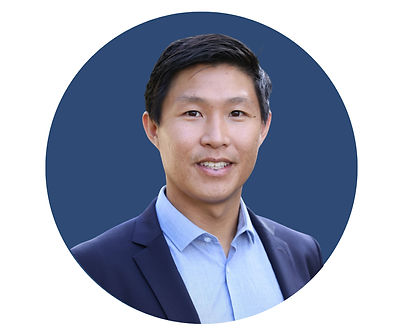
Manwei Chan
Manwei Chan holds a PhD in Aerospace Engineering from MIT, with earlier degrees in Physics and Mathematics from Johns Hopkins University. Throughout his career, he has believed that extreme and isolated environments are not obstacles to science. They are accelerators and enablers of progress. He conducted cosmology research in two of Earth's most extreme environments: spending a year at both the South Pole, Antarctica, and the Atacama Desert in Chile. He also sailed on an Antarctic research vessel, collecting data to ground-truth remote sensing satellites. His belief that extreme environments are accelerators of science, not obstacles to it, now drives his work at Voyager Technologies, where he is developing the VISTA science park, the first US-based ecosystem dedicated to using the extreme space environments to advance research and manufacturing, and Starlab, a permanent commercial and research space station in low Earth orbit.
Advisory Board
.png)
R&D Engineer, CapCO2 Solutions, Inc | Space Security Research Fellow, UN
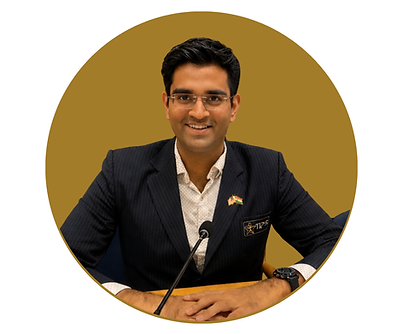
Srihari "Hari" Balaji
Hari holds a Master’s in Mechanical Engineering from Columbia University and a Bachelor’s in Mechanical Engineering from Union College. He currently works as a Research and Development Engineer at CapCO2 Solutions, where he leads the development of multimillion-dollar grant proposals to accelerate sustainable aviation fuel projects. In addition, Hari serves as a Space Security Research Fellow with the United Nations Institute for Disarmament Research, where he develops analytical frameworks and policy research to strengthen international understanding of space security and Space Traffic Management. Previously, he led the development of a grant-winning chemical coating project at NASA that improved the longevity of rocket thrusters. He was invited by the Hong Kong Laureate Forum to present this work to Nobel Laureates. Beyond his technical and research work, Hari has advocated for educational equity by striving to bridge opportunity gaps for underrepresented students. Since December 2025, he has served as a Coach and Exam Coordinator for the USA Astronomy and Astrophysics Competition Foundation, where he leads the selection, training, and mentorship of the United States team for the International Olympiad on Astronomy and Astrophysics 2026. Overall, his academic and research prowess have been recognized through Aviation Week Network’s 20 Twenties award and the Space & Satellite Professionals International 20 Under 35 award.

Head of Space & Development, Access Partnership
Hamza Hameed
Hamza Hameed is Head of Space & Development at Access Partnership in Singapore. He is a member of the ITU Secretary-General’s Youth Advisory Board and served as the Chair of the Space Generation Advisory Council (SGAC) from 2022 to 2024. He leads Access Partnership’s engagements with governments and the private sector on issues related to space, satellite, and connectivity in the Asia-Pacific, and the firm’s global work on space sustainability. Prior to this, Hamza worked as part of the Secretariat of UNIDROIT in Rome. He led the effort towards establishing an international system of secured transactions law for the space sector and advised governments on issues related to digital assets, electronic registries, and cross-border trade. Hamza holds an LLM from the International Institute for Air and Space Law at Leiden University. He teaches spacecraft financing at Leiden University and is a member of the International Institute for Space Law (IISL).

Director of the APIDA, Virginia Tech
Nina Ha
Nina Ha (She/Her/Hers) is the Director of the APIDA (Asian Pacific Islander Desi American) + Center and affiliated faculty in Sociology at Virginia Tech. She holds a Ph.D. in English from the University of Massachusetts, Amherst, an M.A. in Asian American Studies from the University of California, Los Angeles, and a B.A. from Smith College. Her academic expertise is in Vietnamese and diasporic literature, Asian American Studies, Ethnic American Studies, Women’s and Gender Studies, and Global/Transnational Studies. Through her initiative, the U.S. Department of Education designated Virginia Tech as an Asian American Native American Pacific Islander Serving Institution, AANAPISI, which is the first for an institution in Southwest Virginia.
.png)
Founder & Chairman, Gran Systems
Kuang-Han Ke
Kuang-Han has experience spanning global industry, government, and academia associations. He has founded 6 companies, mentored more than 17 companies, and has served on the board of directors for 8 companies. In New Space, he launches cubesats and experiments in space and his company is the International Space Station Gateway Company in Taiwan. His cubesat system integration experience includes both launching cubesats from the SpaceX Falcon 9 launch vehicle and also through the International Space Station. His team is developing a full set of cubesat lab with end-to-end space environment testing equipment, and completed a mission design contract for a lunar lander payload program on top of a commercial lunar lander. He is also the Founder & Chairman of Gran Systems where they engage in system integration design, think-tanks, and manufacturing in new space, and semiconductor industries. Gran Systems products have recently been included in the 2023, 2024, 2025 NASA Small Satellite State-of-the-Art Report. The resulting R&D from the cubesat mission became Gran Systems' hundreds of cubesat subsystem production lines, supporting 54 missions. He started his career in the semiconductor equipment industry, where his contribution was in system-architecting a successful semiconductor equipment, which generated US$3.5 billion in revenue for the company during its 10-year product life cycle. During his past tenure, he was part of the US Malcolm Baldrige National Quality Award and then the Taiwan National Quality Award corporate members. He was senior manager for the semiconductor equipment industry and the precision machinery industry in the Ministry of Economic Affairs, and also served as the expert supervisory committee member of the Taiwan "Productivity 4.0" National Initiative, Taiwan's version of the Industry 4.0 national initiatives for advanced manufacturing. His other contribution includes the subject matter expert speaker and mentor on the subject of Asia Pacific Space Development, in the Asia Pacific Space Generation Online Workshop, organized by the Space Generation Advisory Council, in preparation for a report for the United Nations Programme. He taught semiconductor equipment design for 9 years at the School of Electrical Engineering and Communications at Yuan-Ze University. He founded 3 medical equipment companies, and has improved the non-invasive operation of woman's health and product development of a MR-PET equipment. Kuang-Han holds an M.S. in Aeronautics and Astronautics from Stanford University.

Brand & Communications Specialist
Kelly Keodara
Kelly Keodara is a brand and communications strategist shaping global narratives in aerospace and advanced technology. Known for translating complex technical work into compelling strategic stories, she helps businesses and organizations build visibility, influence, and investor confidence. With experience across aerospace, frontier tech, NGOs, and international organizations, Kelly advises leaders on brand positioning, cross‑cultural communication, and market differentiation. Her ability to simplify sophisticated concepts without losing depth makes her a trusted partner to founders, engineers, and mission‑driven teams. As an Advisory Board Member of The Asian Aerospace and Aviation Organization, Kelly brings a sharp strategic lens and a powerful narrative voice to advancing the global aerospace economy for all.

ML Engineer, Advanced Space
Samuel Kwon
Sam Kwon is a Machine Learning Engineer at Advanced Space, where he develops AI/ML-based solutions for space-domain applications. In addition to his technical work, Sam serves as a project manager for a Spacecraft Autonomy project, bringing experience in engineering execution, technical coordination, and cross-functional project leadership. Beyond his professional work, Sam has experience teaching and mentoring at the university level, having served as an instructor and lead teaching assistant for courses in statistics and applied mathematics. Sam holds an M.S. in Applied Mathematics from the University of Colorado Boulder, with a focus on Data Science and Statistics, as well as dual B.S. degrees in Chemical and Biological Engineering and Applied Mathematics.
.png)
NASA JPL Post-doctoral Program Fellow
Caroline Juang
Dr. Caroline Juang is a climate scientist, STEM advocate, and artist. Caroline earned her Ph.D. in Earth and Environmental Science at Columbia University in August 2025, where she trained as a hydroclimatologist and fire scientist. For her dissertation, Caroline investigated the climate drivers of western US wildfire since the 1980s, under the advisorship of Dr. Park Williams. She integrated statistical methods with analyses of large-scale datasets from remote sensing products, government agency data, and ocean-atmosphere model outputs. Caroline is a National Science Foundation GRFP Fellow (2021-2025), NASA FINESST Fellow (2020-2023), a Future Space Leader Fellow (2019), and a Brooke Owens Fellow (2017). Prior to her Ph.D., Caroline received her Bachelor’s degree in Earth & Planetary Sciences and a minor in Environmental Sciences and Public Policy from Harvard University. She was a project coordinator at NASA Goddard Space Flight Center/ Science Systems and Applications, Inc. in Greenbelt, MD, where she launched and managed the NASA citizen science project Landslide Reporter with Dr. Dalia Kirschbaum. In her work and in her service, Caroline promotes inclusivity and accessibility in the Earth science and aerospace communities through public engagement, the practice of inclusive teaching pedagogy, and mentorship. She completed Columbia University’s Teaching Development Program (TDP) Foundational Track. She has served as a member of the Executive Team for the Brooke Owens Fellowship, co-founded SpaceInterns.org (a platform for aerospace-related resources and an opportunities database) and was a Steering Committee member of Asian Americans and Pacific Islanders in Geosciences (AAPIiG). She is also an artist who creates illustrations, comics, and digital designs for her science, to express her love for space, and to creatively tell stories.

Engineer & Physician
Anthony Yuen
Anthony Sheung Lai Yuen is an engineer and physician passionate about harnessing the benefits of space for health on Earth. He works as a management consultant serving numerous Fortune 500 and top 20 life sciences and healthcare organizations on strategy, operations, and growth. He is a former Chair and member of Board of Directors at the Space Generational Advisory Council (SGAC) and serves at the IAF, AIAA, and UN COPUOS on space medicine and life sciences topics. Anthony is a former Assistant Professor at New York Presbyterian Hospital / Weill Cornell Medicine in New York City, is dual Board Certified in Clinical Informatics and Pediatrics, and holds a Medical Degree (MD) and a Bachelor of Engineering in Mechanical and Space from the University of Queensland in Brisbane, Australia.

Digital Transformation Architect Lead, Booz Allen Hamilton
Amy Uyen Truong
Amy Uyen Truong is a technology strategist and program leader with experience spanning federal consulting, aerospace, and environmental science. At Booz Allen Hamilton, she leads NASA-facing work in AI governance, digital transformation, and Earth observation data systems. Her background bridges the technical and the institutional -- from managing large-scale cross-functional teams to shaping federal open-science policy at the White House OSTP level. Before federal consulting, she spent over a decade in public-sector water management, leading EPA-funded restoration work and publishing on environmental governance. She holds an MS in Water Management and Hydrological Sciences from Texas A&M University and a BA in Environmental Studies from Trinity University.
[1]Aerospace Engineers workforce demographics, Data USA (citing U.S. Census and BLS), 2023: https://datausa.io/profile/soc/aerospace-engineers
[2]Shattering the Bamboo Ceiling: Addressing Asian American Underrepresentation in the C-Suite, Russell Reynolds Associates, 2024: https://www.russellreynolds.com/en/insights/reports-surveys/shattering-the-bamboo-ceiling-addressing-asian-american-underrepresentation-in-the-c-suite
[3]The Impact of Organizational Performance on the Emergence of Asian American Leaders (4,951 CEO archival study), Journal of Applied Psychology, 2018: https://www.apa.org/pubs/journals/releases/apl-apl0000347.pdf
[4]White men have ruled the sky as airline pilots, but that's finally changing, Chicago Sun-Times (citing FAA civil airmen statistics), 2023: https://chicago.suntimes.com/2023/9/19/23879313/airline-pilots-white-men-diversity-race-gender-training-eileen-bjorkman
[5]Southeast Asians are underrepresented in STEM. The label 'Asian' boxes them out more, NPR (citing Census data), 2021: https://www.npr.org/2021/12/12/1054933519/southeast-asian-representation-science
[6]Asian Americans in STEM: Perceptions vs. Realities, Society of Women Engineers (All Together), 2024: https://alltogether.swe.org/2024/05/asian-americans-in-stem-perceptions-vs-realities/
[7]U.S. Employment data on women engineers, Society of Women Engineers, 2025: https://swe.org/research/2025/us-employment/